As Uganda contends with a fertility rate of 5.4, the responsibility of family planning continues to rest almost entirely on women’s shoulders. The Uganda Demographic and Health Survey clearly shows this gap, recording a modern contraceptive prevalence rate of 43% among women (UDHS, 2022) compared to 39.9% among men (UDHS, 2016). At the center of this disparity are the deeply rooted social and cultural norms that promote reproductive health as a woman’s burden while equating a man’s virility, social standing, and authority with having a large family.
Beneath these expectations lies the myriad physical, social, and emotional challenges borne by women. Often, they endure the side effects of hormonal and non-hormonal contraceptives alongside the anxiety of unintended pregnancies. On the other side, men remain held back by myths that permanent methods like vasectomy diminish their manhood or sexual strength. Yet, both partners need to share equal agency, dignity, and accountability in deciding when, whether, and how many children to have for effective reproductive justice.
This is where Men Plus II comes in.
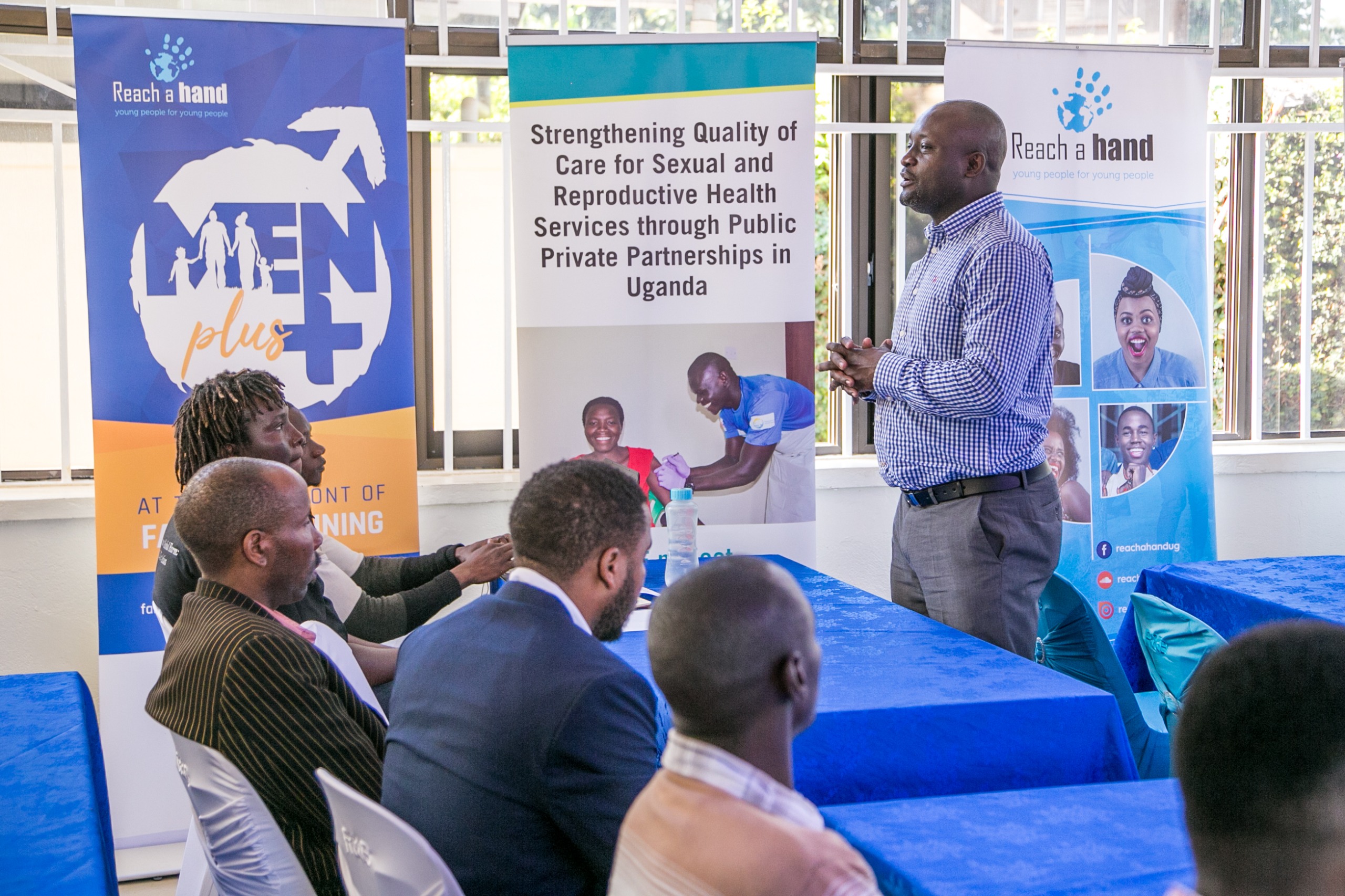
The project seeks to shift perceptions around male contraception from the grassroot to national level. Implemented by Reach A Hand Africa (RAHA), Reproductive Health Uganda, and Marie Stopes Uganda, with support from the Bergstrom Foundation, it empowers men as active users and vocal champions of family planning, rather than passive partners. Through Men Action Units, peer-led dialogues, and community outreaches, the men have a safe space to share experiences and support each other in making informed contraceptive choices. The use of vasectomy-focused IEC materials, radio and TV talk shows, and documentary testimonials further delivers accurate information and demystifies men’s role in reproductive health.
Contextually, Patrick, a father of six from Kumi District in Eastern Uganda was struggling to meet the needs of his family. As a subsistence farmer, he faced growing impoverishment, owing to neither he nor his wife using contraception. After hearing about Men Plus on local radio, he decided to explore vasectomy. Despite his wife’s initial fear that the procedure would weaken him, Patrick visited a partner clinic, received accurate counseling, and underwent the vasectomy. That choice led to a positive transformation for his family. He has since started building a permanent home, kept his children in school, and improved their nutrition. Today, Patrick champions vasectomy among his peers, reframing contraception not as a threat to masculinity, but as a way to protect the health, dignity, and future of the people you love.
Together with programs like Men Plus II, Uganda needs to strengthen implementation of Male Involvement in Sexual and Reproductive Health Service Delivery framework. Again, allocate resources towards realization of the Uganda FP2030 commitments. These would ensure increased contraception uptake among men, paving the way for regulated fertility, healthier families and sustainable livelihoods.
Young people for young people

© Reach A Hand Uganda. Empowering young people through education, advocacy, and innovation. Connect with us to build a healthier, more inclusive future.
info@reachahandug.org
+256 414 697 037
All rights reserved 2025